
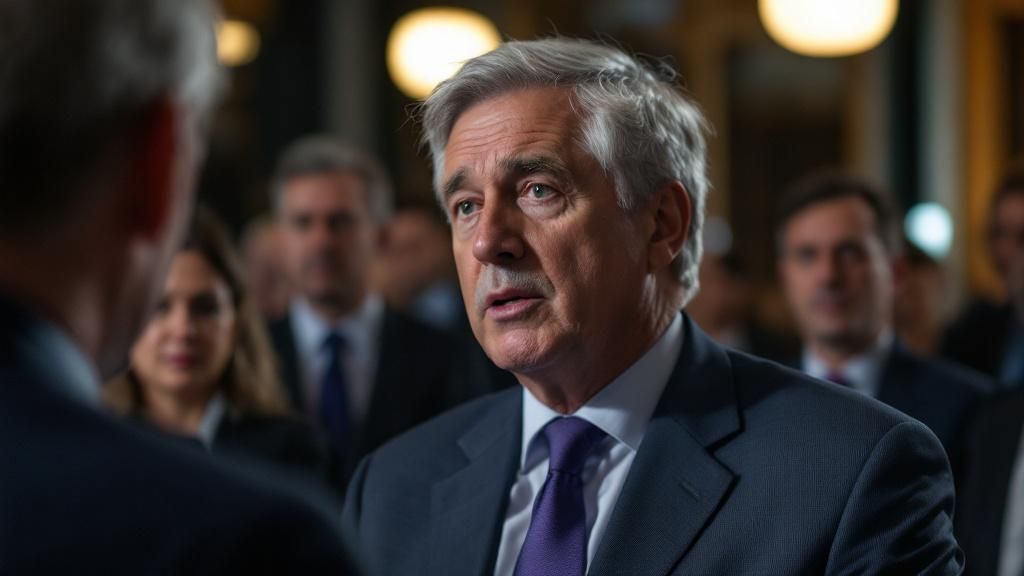
As households across the nation grapple with skyrocketing energy bills and price increases hitting record levels, the opposition leader has initiated a scathing attack on the Prime Minister’s response to the cost of living crisis. In a tense parliamentary exchange, the opposition has challenged the administration’s inadequate support measures, calling for greater support to help hard-pressed families. This article explores the mounting political tensions surrounding the crisis and considers the contrasting approaches for financial support.
The Opposition party’s Criticism of State Policy
The opposition leader has increased pressure of the government’s handling of the mounting cost-of-living emergency, asserting that present interventions prove inadequate in addressing the extent of difficulty impacting British families. In parliamentary debate, the opposition has set out a detailed critique spanning insufficient financial assistance, insufficient intervention in energy markets, and a perceived lack of urgency in tackling inflation. The opposition argues that whilst households grapple with extraordinary costs, the government’s piecemeal approach simply treats symptoms rather than tackling underlying causes of financial hardship.
Central to the opposition’s position is the contention that the government has fundamentally misjudged both the scale and length of the crisis. Opposition spokespersons have pointed to data suggesting that millions of households now face genuine hardship, with many forced to choose between heating and eating. The opposition contends that the government’s early action did not fully gauge the crisis’s effect, producing relief measures that turned out to be insufficient when the situation got worse further. This error of judgment, they argue, reveals wider shortcomings in forecasting accuracy and policy preparation.
Limited Assistance Provisions
The opposition has specifically targeted public funding initiatives as insufficient and poorly targeted, maintaining that fuel cost controls do not adequately safeguard vulnerable populations effectively. Critics point out that whilst the government has introduced various financial interventions, such as grants and council tax rebates, such provisions provide only temporary relief without tackling systemic issues. The opposition argues that eligibility-based assistance remain overly stringent, shutting out millions of employed households who yet face difficulties with mounting expenses. In addition, they argue the government’s approach lacks the boldness needed to address such an unparalleled economic difficulty.
Opposition assessment suggests that existing assistance programmes disproportionately disadvantage middle-income households who fall between qualifying criteria for means-tested support. The party has put forward different approaches incorporating unconditional income transfers, broadened support schemes, and state involvement in fuel sectors to control costs. They highlight that interim steps, whilst welcome, fail to replace comprehensive structural reform. The opposition argues that without substantial legislative change and increased public investment, working people will continue experiencing severe money pressures throughout the foreseeable future.
Long-term Economic Policy Challenges
Beyond immediate crisis management, the opposition has highlighted crucial concerns regarding the government’s long-term economic strategy and competitive position. Opposition analysts argue that the current approach focuses on short-term political considerations over sustainable economic planning, potentially compromising Britain’s future economic wellbeing. They contend that without targeted investment in clean energy infrastructure, industrial capacity, and skills development, the nation risks extended economic stagnation. The opposition underscores that addressing cost of living pressures requires comprehensive reforms targeting productive efficiency, creative advancement, and economic sector development alongside urgent relief measures.
The opposition has expressed concerns that government policy lacks coherence across different economic domains, with energy policy, industrial strategy, and fiscal measures working independently rather than as integrated components. Critics argue this piecemeal framework hinders resolution of persistent inflation and deep-rooted economic issues. The opposition pushes for a coordinated national strategy including energy transition, manufacturing revival, and skills development. They maintain that genuine crisis resolution necessitates radical policy overhaul rather than gradual modifications to existing frameworks.
Government’s Defence and Counterarguments
The government has robustly defended its economic policy, arguing that the affordability pressures are primarily driven by worldwide circumstances beyond Westminster’s direct control. Ministers have underscored the unprecedented nature of the energy emergency, resulting from geopolitical conflicts and international supply chain disruptions. They contend that their focused assistance measures, including the energy price cap and cost of living payments, constitute a balanced and economically prudent approach. The Finance Ministry maintains that overspending could worsen inflation to a greater degree, undermining long-term economic stability and in the end prejudicing the same families the opposition claims to champion.
Government officials have emphasised the significant monetary support already deployed, totalling billions of pounds in immediate aid to low-income families. They maintain that their approaches reconcile short-term assistance with responsible financial stewardship, averting the debt spiral that uncontrolled expenditure could provoke. Ministers also point to their initiatives in boosting energy security through sustainable energy projects and supply diversification. The government asserts that whilst the opposition provides sympathetic language, their proposed solutions are economically questionable and would prove unsustainable without increasing taxation or additional debt.
Furthermore, government officials highlight their commitment to addressing core economic problems through efficiency enhancements and business investment incentives. They contend that enduring recuperation necessitates systemic economic transformation rather than immediate financial relief. The administration believes this approach eventually provides greater prosperity and security for every citizen.
